Temple Architecture: How to Read a Temple
Even without knowing any Chinese, a Taiwanese temple’s exterior communicates considerable information about its deity, age, and status.
The roof is the most visually distinctive element: the upswept, curling ridge ends (燕尾, “swallow tail”) indicate a temple dedicated to a deity of imperial rank, while more modest curved roofs are used for lower-ranking deities. The roofs of major temples are encrusted with elaborate polychrome ceramic figures — mythological characters, dragons, phoenixes, and scenes from Chinese opera — in a craft tradition called 剪黏, using shards of broken porcelain and ceramic tile. The density and quality of this decoration is a rough index of a temple’s wealth and prestige.
The façade of a major temple typically features elaborately carved stone pillars (often depicting spiralling dragons), painted door gods(門神) on the main gates — fierce armoured warriors whose function is to guard the deity within — and gilded woodcarvings under the eaves.
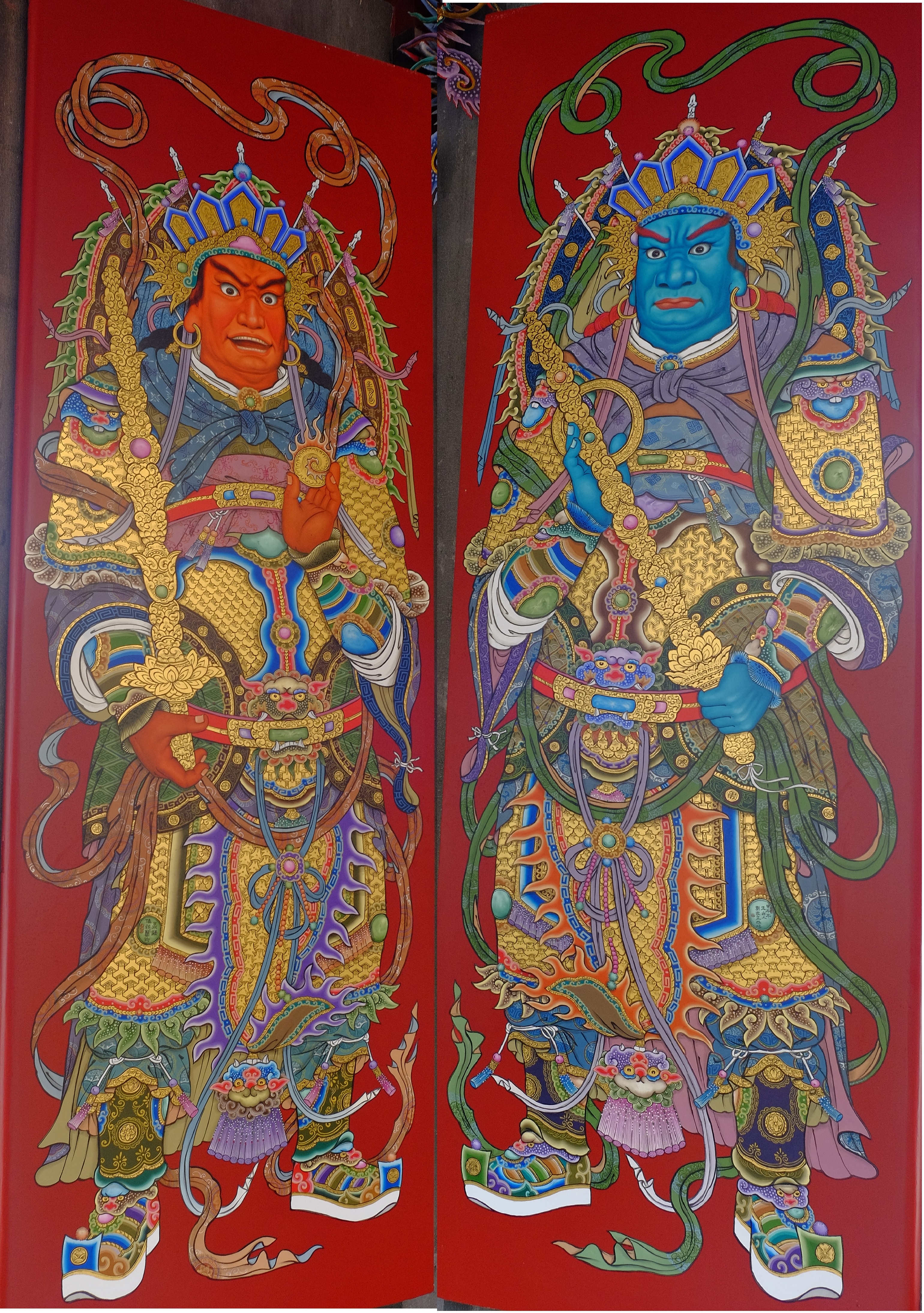
Colour is also significant: red is the predominant colour of Taiwan’s folk religion temples (associated with good fortune and vitality), while Buddhist temples tend toward the darker reds, ochres, and whites of the continental Chinese Buddhist tradition. The contrast between a brightly painted, richly ornamented folk religion temple and the simpler, more austere forms of a meditation hall in a Chan Buddhist monastery is immediately readable even without cultural background.