Skip to content
Metro Systems: Taipei, Kaohsiung, Taoyuan, and Taichung

Metro Systems: Taipei, Kaohsiung, Taoyuan, and Taichung

Taiwan’s metro systems represent the easiest transport for travellers, combining English signage, intuitive layouts, and reliable service. However, each city’s system reflects different development priorities.

Taipei Metro (台北捷運, MRT)
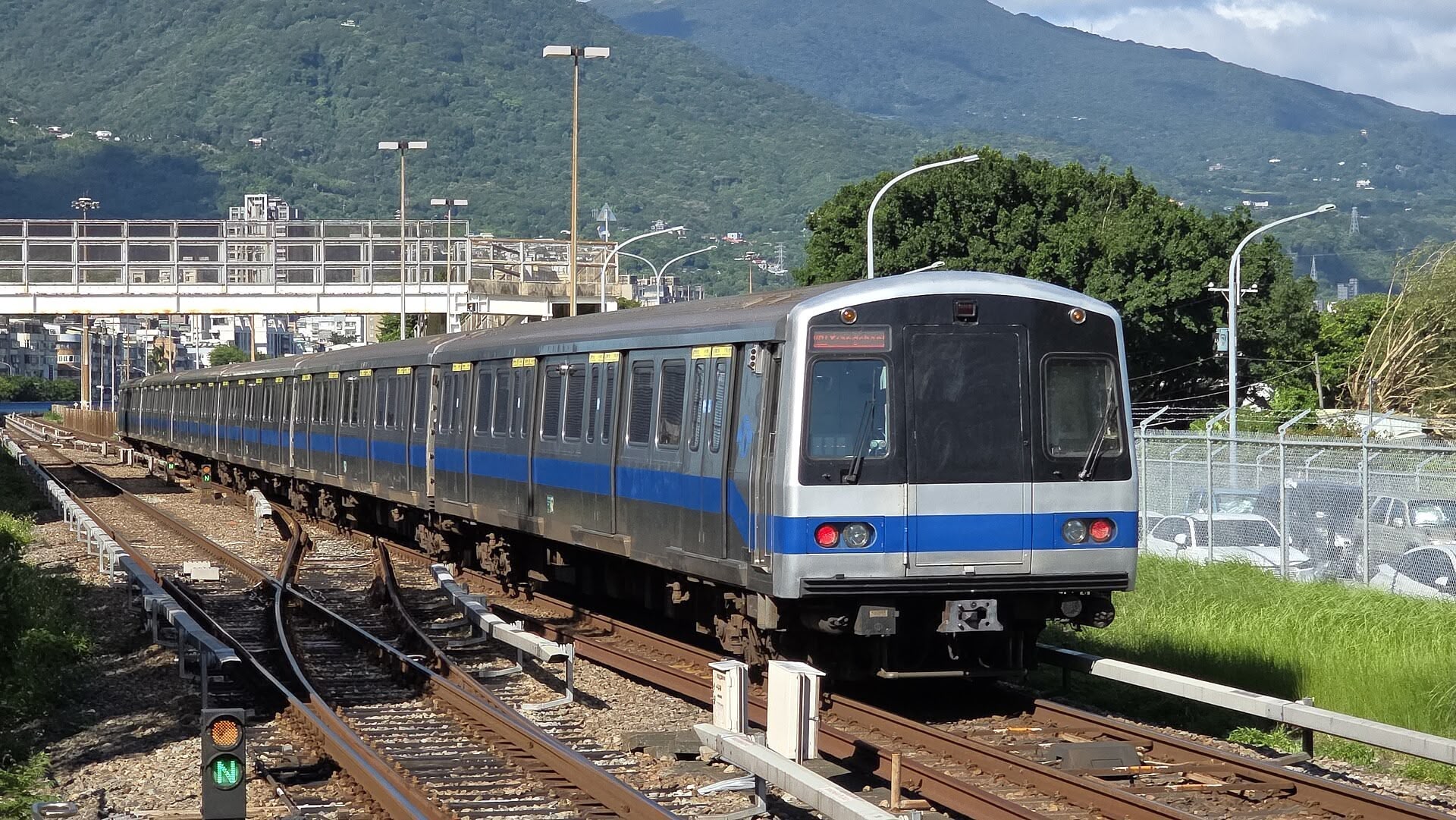
Taipei Metro
Taipei Metro. Credit: Sinsyuan,CC BY-SA 4.0,https://commons.wikimedia.org/w/index.php?curid=172555861

Taiwan’s most extensive metro serves the capital with six major lines distinguished by colour. The system is clean, safe, and efficient, running roughly 06:00-midnight with trains every 3-8 minutes. In-train displays announce upcoming stations in Mandarin, Taiwanese, Hakka, English, Japanese and Korean.

Usually, it is not difficult to navigate at stations. Platforms clearly mark train directions by listing terminus stations with line colours. Most confusion arises from the system’s two main rail operators (Taipei Metro and separate airport lines) using the same stations. Just follow colour-coded signs carefully. Also it causes confusion when having a transfer in a huge station like Taipei Main Station. Follow the line colour signs and you will be fine.

Food and drink are prohibited inside stations and trains, with fines for violations. Priority seating at each carriage should be offered to elderly, pregnant, disabled, injured, illed passengers.

The platform screen doors on some Taipei MRT stations are fitted with LED light strips on the top that display different colours to indicate the relative crowding level of each carriage as the train arrives. Green indicates a less crowded carriage; red or other colours indicate higher occupancy. This system encourages passengers to distribute themselves along the platform rather than clustering at the most convenient exit points. It is a small but practical piece of infrastructure that reflects a broader Taiwanese investment in the ergonomics of public transport — and if you have heavy luggage or a preference for space, it is worth pausing to read the lights before choosing where to board.
Taipei MRT stations are equipped with tactile guiding paths along platforms and concourses, and staff are trained to assist visually impaired passengers. A lesser-known feature is that passengers with visual impairments can request guided assistance through the entire journey within a station — including through fare gates and to the correct platform — by approaching any member of staff or pressing the assistance button at accessible service points. Upon arrival, staff at the destination station will escort the passenger to the exit. The system is designed so that a visually impaired traveller can navigate the network alone with full support at every stage, reflecting an accessibility standard in Taiwan’s public infrastructure that is worth noting for travellers with disabilities or those accompanying someone who is visually impaired.
At certain interchange stations on the Taipei MRT network, trains on connecting lines are timed to wait briefly for passengers transferring from a just-arrived train, rather than departing on a fixed schedule that might force a missed connection. This coordination is not universal across the network but is applied at key transfer points during off-peak hours, and means that the transfer time between lines is often shorter in practice than the theoretical timetable would suggest. It is an aspect of the system’s operational design that rewards the traveller who moves briskly at interchange stations rather than waiting for the next train.

Kaohsiung Metro (高雄捷運)

Southern Taiwan’s metro is smaller but well-designed, with just two main lines: Red (north-south) and Orange (east-west). The system opened in 2008 and feels modern and spacious, with impressive station architecture.

You can use Kaohsiung Metro for reaching Zuoying HSR station, the airport, Formosa Boulevard (famous for its Dome of Light), Love River area, Pier-2 Art Centre, and Cijin Island ferry terminal. Limited coverage means many destinations still require buses, trams or taxis, but where the metro goes, it’s the best option.

Taoyuan Metro (桃園捷運)

Primarily serving travellers between Taipei and Taoyuan International Airport, this airport line offers two services: Express (skipping stops, 35-40 minutes) and Commuter (stopping at all stations). Both use the same line and charge by distance. The metro also serves some Taoyuan suburbs and connects to regular TRA trains and Taiwan Metro at various stations.

Taichung Metro (台中捷運)

Taiwan’s newest metro, opening in 2021, currently consists of one Green Line running north-south. Coverage is limited, missing the city centre and most tourist areas. Most travellers in Taichung rely on buses, taxis, or scooters instead. If your accommodation or destinations happen to align with the Green Line, use it. Otherwise, expect to use other transport modes.

MRT stations each have a distinctive, short melodic jingle that plays when a train is about to arrive or depart. More subtly, the tone produced when you tap your smart card on an entry or exit gate varies slightly by context — a different tone signals a successful tap-in versus a tap-out, or a low-balance warning. Regular commuters develop an acute ear for these sounds and respond to them without looking at the screen. For visitors, knowing that a harsh or repeated beep means something needs attention (low balance, incorrect tap, wrong gate direction) saves confusion and the mild embarrassment of blocking the gate queue. Check this YouTube video to know more about jingles at different stations
Since the Taipei MRT first promoted it in 1996, a deeply embedded unspoken rule has governed escalator use: stand on the right, leave the left free for those in a hurry. In recent years, Taipei Metro has been promoting the idea that passengers can stand on both sides to relieve crowding more efficiently, noting that research has shown standing on both sides actually moves more people faster — but the old habit has proven extremely resistant to change. Visitors should default to standing on the right. Standing still on the left is tolerated, but expect quiet pressure from behind.
Last updated on