Flora: Reading the Forest by Elevation
One of the most under-appreciated aspects of Taiwan’s nature is its vertical compression: by ascending from a coastal plain to a mountain peak, a visitor passes through more distinct forest types than a journey from the tropics to the Arctic in most parts of the world.
The pattern runs broadly as follows:
Lowland and foothill zone (0–500 m): Subtropical semi-evergreen and evergreen broadleaf forest, in parts of the south transitioning to tropical monsoon forest. Characteristic trees include various Ficus, Machilus, and Bischofia species. Mangrove systems fringe sheltered estuaries in the southwest; the largest surviving stands are within Taijiang National Park.
Sub-montane zone (500–1,500 m): Dense evergreen broadleaf forest dominated by the Machilus–Castanopsis association — species of the laurel family (Lauraceae), stone oaks (Castanopsis), and true oaks (Cyclobalanopsis and Quercus). This zone supports some of the richest overall biodiversity in Taiwan, with layered canopies, abundant epiphytes, and among the highest densities of endemic plant species.
Montane cloud forest (1,500–2,500 m): The most visually distinctive forest type in Taiwan. Persistent cloud and fog — particularly on north-facing slopes and ridges — support a specialised community of ancient Hinoki and Formosan cypresses (Chamaecyparis obtusa var. formosana and C. formosensis), draped in mosses, ferns, and liverworts. Many of these trees are centuries to millennia old. Alishan’s famous ancient cypress groves lie in this belt. The endemic Taiwan Beech (Fagus hayatae) also occurs here, one of the world’s most restricted beech species.
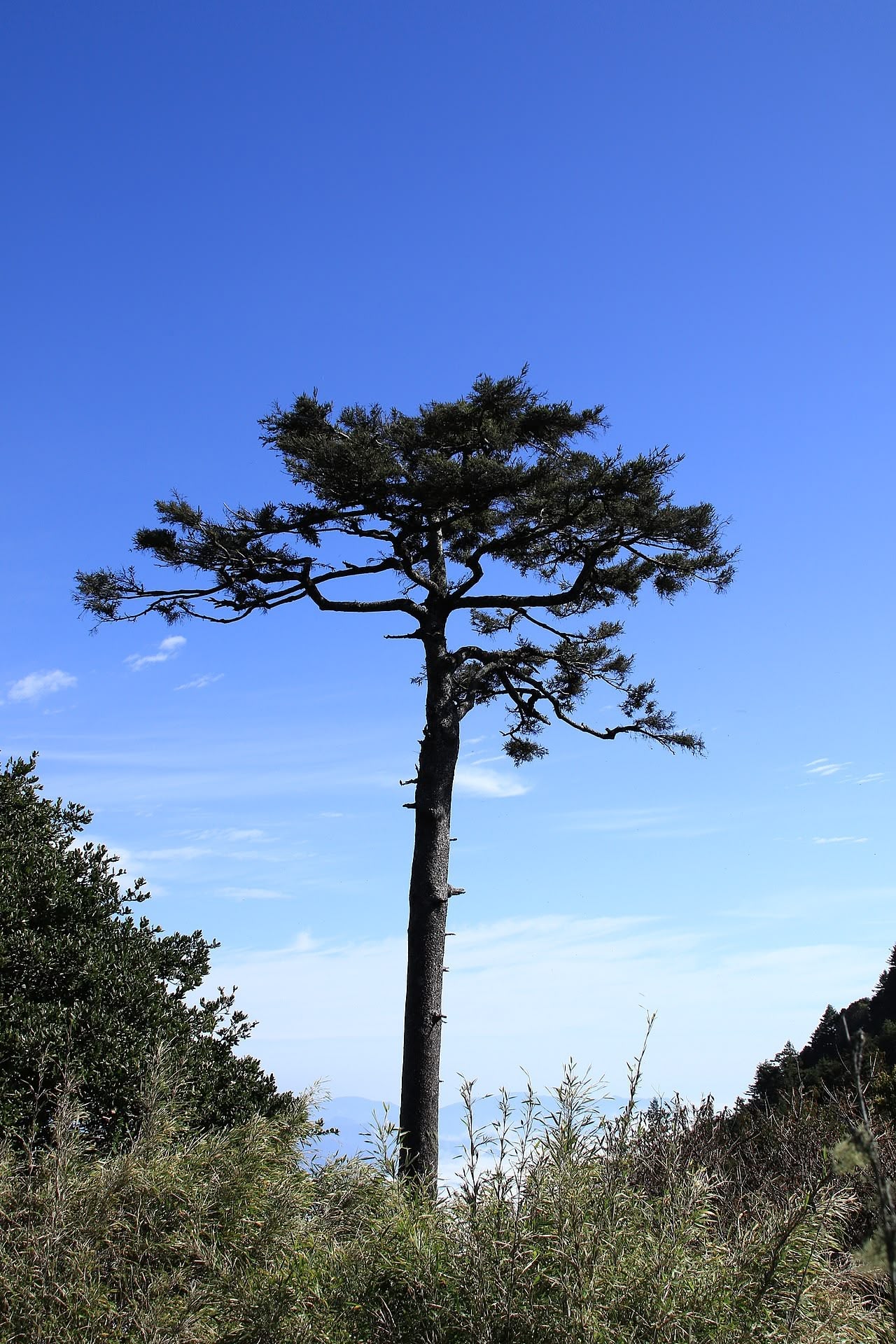
High-montane coniferous zone (2,500–3,500 m): Taiwan Fir (Abies kawakamii), Taiwan Hemlock (Tsuga chinensis var. formosana), and Taiwan Spruce (Picea morrisonicola) dominate. This is the realm of Taiwan’s three alpine national parks: Yushan, Taroko, and Shei-Pa.
Subalpine and alpine zone (above 3,500 m): Dwarf scrub of Juniperus morrisonicola — a juniper that grows prostrate and wind-sculpted on exposed ridgelines — alongside Yushan Rhododendron (Rhododendron pseudochrysanthum) and open grassland give way above the treeline to bare rock and scree. Taiwan Edelweiss (Leontopodium microphyllum) and a suite of endemic alpine wildflowers are found here. The contrast between the humid, mossy cloud forest just a few hundred metres below and these stark, wind-battered ridgelines is one of Taiwan’s most dramatic transitions.
For the non-specialist, the practical takeaway is simple: the higher you go in Taiwan’s mountains, the more unusual and endemic the flora becomes. Forest recreation areas at mid-elevation are the most accessible entry points; the major high peaks require permits and preparation.