Natural Disasters
Taiwan’s position along the Pacific Ring of Fire and in the primary western Pacific typhoon track means natural disasters are an inherent part of the island’s reality. Understanding these phenomena helps travellers prepare appropriately rather than worry unnecessarily: these events are well-managed, and Taiwan has developed sophisticated systems for prediction and response.
Typhoons
Typhoons (tropical cyclones) are the most significant weather-related natural hazard affecting Taiwan. The typhoon season officially runs from June through October, peaking in July, August, and September. Taiwan typically experiences three to four typhoons annually, though not all make direct landfall.
Formation and tracking: Typhoons develop over the warm western Pacific Ocean and generally track westward or northwestward. Taiwan’s position makes it vulnerable to storms following various paths: some strike the east coast directly, others make landfall in the south or north, whilst some pass through the Taiwan Strait. The Central Mountain Range significantly influences typhoon behaviour1, often weakening storms or causing them to stall, which can paradoxically increase total rainfall even as wind speeds decrease.
Impacts: Modern typhoons in Taiwan rarely cause casualties due to excellent forecasting and preparation systems, but they significantly disrupt daily life. The primary hazards are threefold:
Wind damage: Typhoons can generate sustained winds exceeding 150 km/h, with gusts reaching 200 km/h or more in the strongest storms. These winds tear down signage, uproot trees, damage buildings, and turn loose objects into dangerous projectiles. Coastal areas face particularly strong winds, and elevated locations experience even greater wind speeds.
Heavy rainfall and flooding: Heavy rainfall is often more destructive than wind, as typhoons regularly deliver 500mm–1,000mm of rain over 24–48 hours, with extreme events exceeding 2,000mm in mountain areas. This rainfall causes river flooding, urban inundation, and triggers landslides. Mountainous areas face risks of catastrophic landslides, whilst low-lying coastal and riverside areas may flood extensively.
Storm surge and coastal hazards: Typhoons can generate storm surges, as elevated sea levels pushed ashore by powerful winds, that inundate coastal areas. Whilst full-scale tsunamis from typhoons are rare, the combination of storm surge, high waves, and heavy rainfall creates significant coastal flooding risks. Eastern Taiwan’s coastline, facing the Pacific directly, experiences particularly powerful wave action during typhoons.
Foehn winds: A particularly interesting and sometimes dangerous phenomenon occurs when typhoons pass over the north. As the typhoon’s circulation forces moist air over the Central Mountain Range from west to east, the air rises, cools, and releases its moisture as rain on the western slopes. The now-dry air descends the eastern slopes, compressing and warming adiabatically. The result can be dramatic: whilst the west experiences rain, eastern Taiwan (especially Taitung) may experience sudden temperature spikes of 5°C–10°C, with temperatures occasionally exceeding 38°C–40°C, combined with extremely low humidity and strong, gusty winds. These hot, dry conditions are uncomfortable and can stress agricultural crops, increase wildfire risk in mountain areas, and create additional challenges during what is already a dangerous weather event.
Response systems: Taiwan declares typhoon holidays when storms approach, closing schools and businesses in affected areas. This isn’t a frivolous closure: it’s a pragmatic recognition that travelling during typhoon conditions is dangerous. Convenience stores and some restaurants often remain open even during typhoons, reflecting Taiwanese resilience, but travellers should stock supplies beforehand.
Traveller considerations: If a typhoon approaches during your visit, don’t panic. Follow local advisories, expect transport disruptions for 1–2 days, and avoid mountains, coasts, and riversides. Most importantly, be flexible: typhoons are unpredictable, and your carefully planned itinerary may need adjustment. Hotels and transport companies are experienced with these disruptions and generally accommodate necessary changes. Stay indoors during the storm, away from windows, and never venture onto exposed coastlines or riversides to observe the conditions: every year, preventable casualties occur from such decisions.
Plum Rains
The plum rain season occurs in May and early June, named for coinciding with plum ripening. This isn’t a single storm but a frontal system that stalls over Taiwan and surrounding areas, bringing persistent, heavy rainfall.
The meteorological cause involves the meeting of cold air from the north and warm air from the south along a quasi-stationary front. Rather than moving through quickly like typical fronts, this system lingers, sometimes for weeks, producing continuous rain and embedded thunderstorms capable of extreme rainfall rates.
Plum rains affect northern and central Taiwan most significantly. Daily life continues, as this is expected weather, not an emergency, but outdoor activities become challenging. The persistent rain can be psychologically wearing, particularly for visitors expecting tropical sunshine. River levels rise significantly, and landslide risk increases in mountain areas.
For travellers, the plum rain season suggests avoiding late May for northern Taiwan visits, or at least planning indoor alternatives. Museums, hot springs, indoor markets, and covered areas become more attractive during this period.
Flash Flooding and Landslides

Taiwan’s steep terrain and intense rainfall combine to create risks of rapid flooding and landslides. These hazards connect directly to the climate: the island’s geology can’t absorb the enormous quantities of water delivered by typhoons, plum rains, and intense thunderstorms.
Urban flooding: Cities, particularly in southern and central Taiwan, can experience flooding during extreme rainfall events. Taipei’s extensive flood control system, developed after devastating floods in the past, generally manages well, but lower-lying areas may still flood during exceptional typhoons. Southern cities, built on flatter terrain, are particularly vulnerable.
Mountain landslides: Taiwan’s mountains are geologically young, steep, and heavily fractured by earthquakes. Heavy rain saturates slopes, triggering landslides that can block roads, rivers, and occasionally impact communities. Mountain roads routinely close during and after heavy rainfall: these closures are necessary safety measures, not inconveniences.
The 2009 Typhoon Morakot disaster, which caused catastrophic landslides and flooding killing hundreds, fundamentally changed Taiwan’s approach to mountain safety. Authorities now close mountain areas more readily during heavy rain, and some areas deemed too risky remain permanently off-limits.
Traveller implications: Never attempt to cross flooded roads: water depth and current strength are deceptive. Respect mountain area closures. If you’re hiking and heavy rain begins, descend immediately if possible, or seek shelter and wait.
Earthquakes
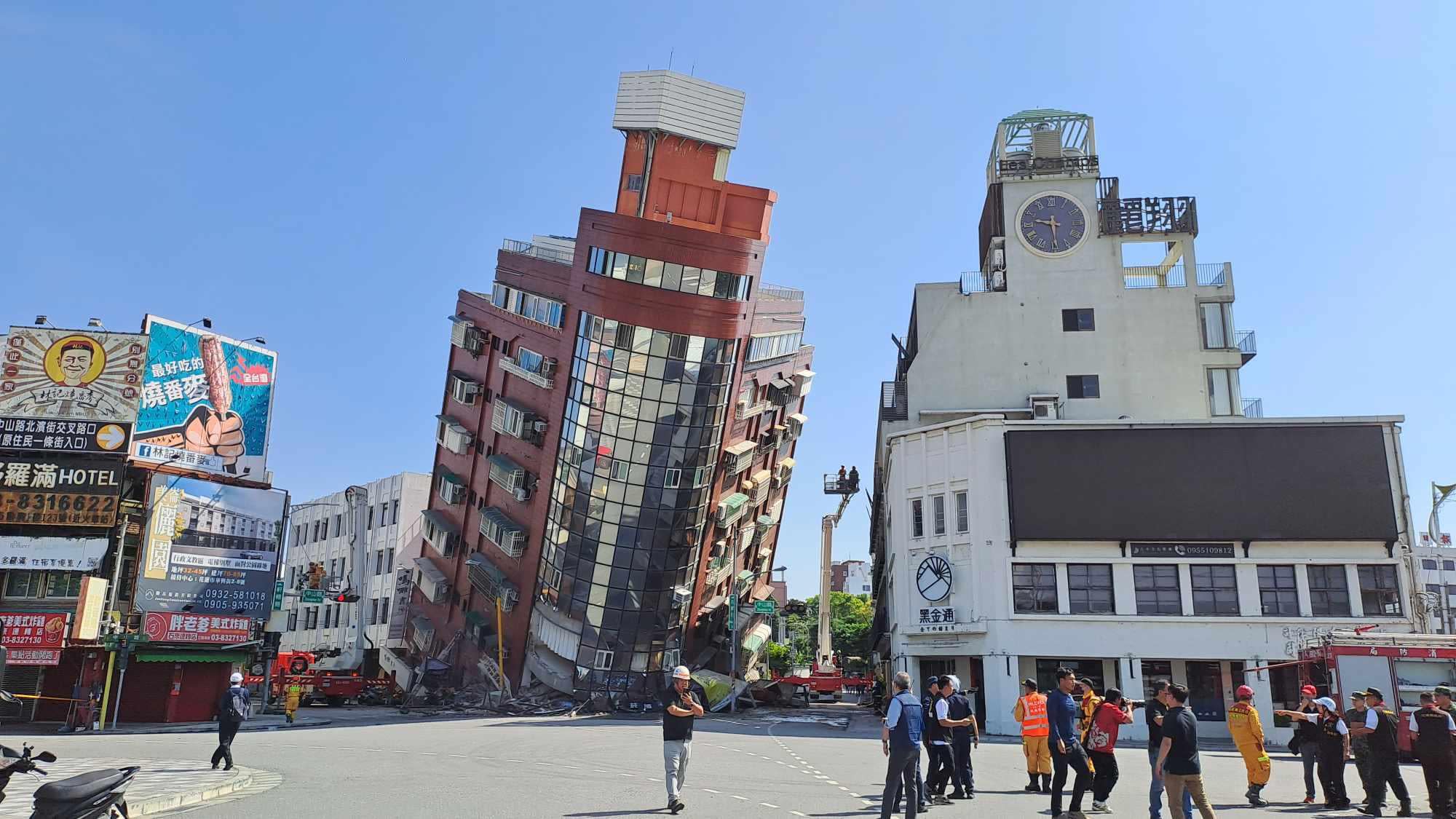
Whilst not a climatic phenomenon, earthquakes represent another major natural hazard that travellers should understand. Taiwan sits at the convergence of the Philippine Sea Plate and the Eurasian Plate, making it one of the most seismically active regions on Earth. The island experiences thousands of earthquakes annually, though most are too small to notice. Significant earthquakes, those strong enough to cause damage or widespread awareness, occur several times per year, and major destructive earthquakes happen every few decades.
Earthquake characteristics: Taiwan’s earthquakes range from barely perceptible tremors to violent shaking capable of collapsing buildings. The 1999 Chi-Chi earthquake (magnitude 7.3) killed over 2,400 people and fundamentally changed Taiwan’s building codes and emergency preparedness.
Early warning system: Taiwan has developed one of the world’s most sophisticated earthquake early warning systems. The system detects the initial, faster-moving seismic waves (P-waves) and calculates the earthquake’s location and magnitude within seconds. It then broadcasts warnings via the Cell Broadcast Service before the slower, more destructive waves (S-waves) arrive. This provides advance warning ranging from approximately 10 seconds to one minute depending on your distance from the epicentre: not enough time to evacuate, but sufficient to take protective action.
Warning reception: If a significant earthquake is detected, everyone’s mobile phone in the affected area will emit a distinctive, loud alarm and display an earthquake alert message showing the expected intensity and countdown to arrival. This system requires no app installation or prior setup: it works through the Cell Broadcast Service, which functions even when mobile networks are congested. Foreign visitors’ phones will receive these alerts if they support Cell Broadcast functionality (most modern smartphones do).
What to do: When you receive an earthquake warning or feel shaking, the response depends on your location. Indoors, take cover under sturdy furniture (desks, tables) away from windows, or brace yourself in a doorway or against an interior wall. Do not run outside during shaking: falling debris poses greater risk than remaining inside modern buildings. Outdoors, move away from buildings, power lines, and other structures. If you’re on public transport, remain seated and hold on. After shaking stops, be prepared for aftershocks, which can continue for days or weeks.
Modern building safety: Taiwan’s post-1999 building codes require earthquake-resistant construction, and most modern buildings, particularly in cities, are designed to withstand significant shaking. Older buildings, particularly those built before 1999, pose greater risk. Hotels and major tourist facilities generally meet high safety standards.
Traveller perspective: Earthquakes are unsettling, particularly if you’ve never experienced one, but Taiwan’s preparedness is excellent. The early warning system, strict building codes, and public awareness mean that even significant earthquakes typically cause limited casualties. Most travellers will experience only minor tremors, if any. The key is understanding what to do rather than worrying about whether an earthquake will occur: the answer is that small earthquakes will definitely occur, but significant ones are unpredictable and, whilst possible, are managed risks rather than reasons to avoid visiting.
-
Usually, when a typhoon passes over the Central Mountain Range, it weakens significantly: most of typhoons cannot “survive” after that. That’s why Taiwanese people have given the range the nickname “National Guardian Mountain”(護國神山). The same nickname is also used to refer to TSMC, Taiwan’s “Silicon Shield.” ↩︎