Yushan National Park 玉山國家公園
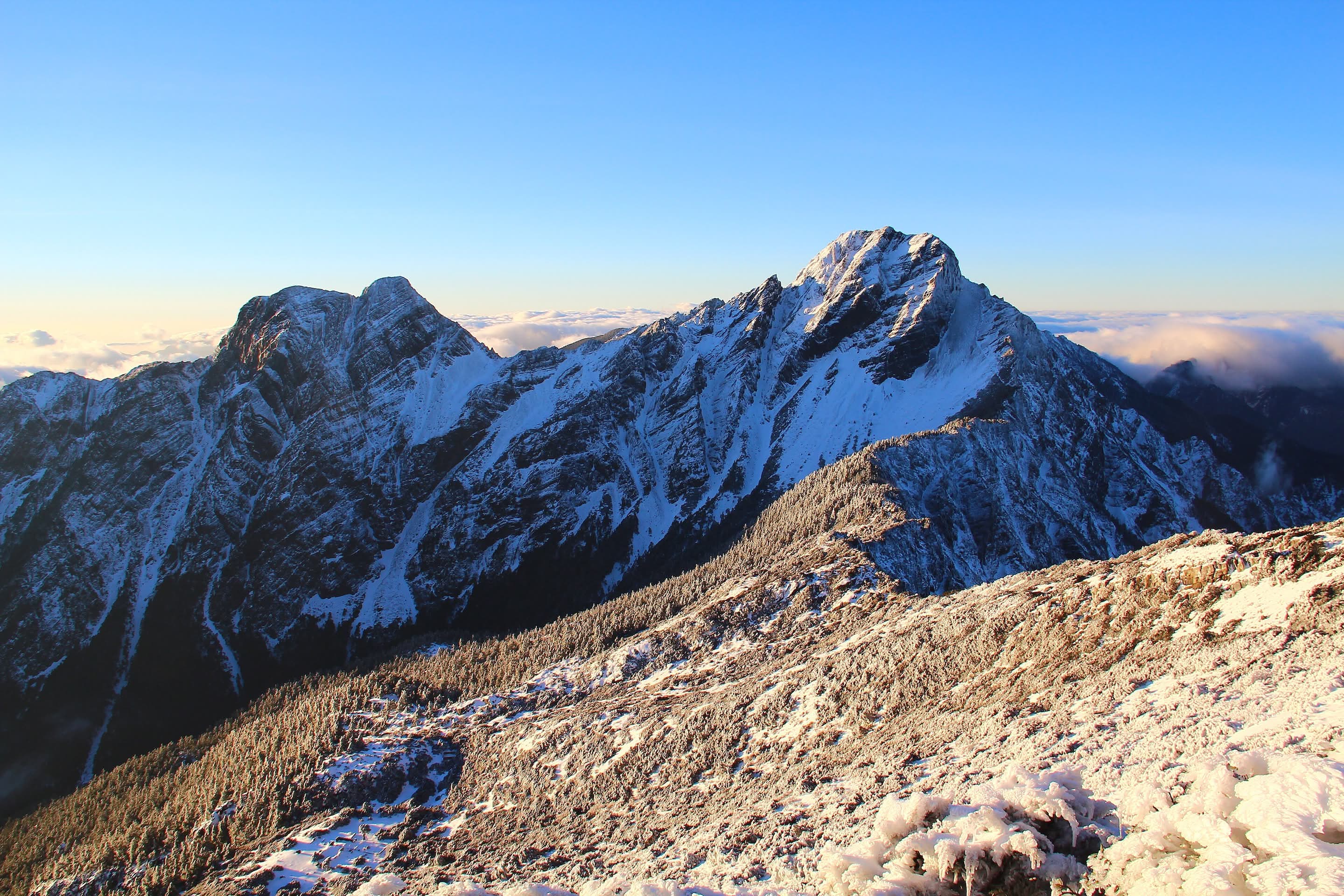
Location: Central and south-central Taiwan, spanning Nantou, Chiayi, Kaohsiung, and Hualian counties
Established: 1985
Yushan — “Jade Mountain” — is the highest peak in Taiwan at 3,952 metres, making it also the highest point in Northeast Asia and notably taller than Japan’s Mount Fuji. But the park is not simply a single summit. It encompasses Taiwan’s most rugged section of the Central Mountain Range, including over thirty peaks above 3,000 metres, and covers 105,490 hectares — the largest land area of any national park in Taiwan.
The wildlife within the park is extraordinary. Yushan is one of the few places where you can encounter the Formosan black bear(台灣黑熊), Taiwan’s largest land mammal, though sightings require both patience and luck. The park’s altitudinal range from subtropical forest at lower elevations to alpine meadows and rocky summits near the peaks supports an unusually dense variety of flora, including Yushan rhododendrons, which bloom in late spring at high elevation.
On the permit system:
This is the most practically important thing to understand before planning a Yushan trip. To climb the main peak, you need two permits: a National Park Entry Permit and a Police Mountain Entry Permit. For more details, please check Hike Smart Taiwan Service. For foreign visitors, there is a dedicated quota of spots separate from the general lottery. Applications open a few months in advance. Demand is high; expect to apply more than once.
The standard route is a two-day, one-night itinerary from the Tataka trailhead: hikers ascend to Paiyun Lodge at 3,402 metres on the first day, then push to the summit (an additional 550 metres) before dawn on the second day to catch the sunrise, and descend fully by midday. The round trip covers around 22 kilometres. The trail is well-maintained and clearly marked. It is strenuous but does not require technical climbing skills in dry conditions. Winter ascents (December to March) require experience with snow and ice.
Who it suits: Fit hikers who can plan months ahead and tolerate some uncertainty. The permit system is genuinely demanding, but the logistics have improved significantly for foreign visitors in recent years. Those unwilling to tackle the summit can still access the park via lower-elevation trails at Tataka without a special permit.