Shei-Pa National Park 雪霸國家公園
Location: Northern Central Mountain Range, bordering Taichung, Hsinchu, and Miaoli counties
Established: 1992
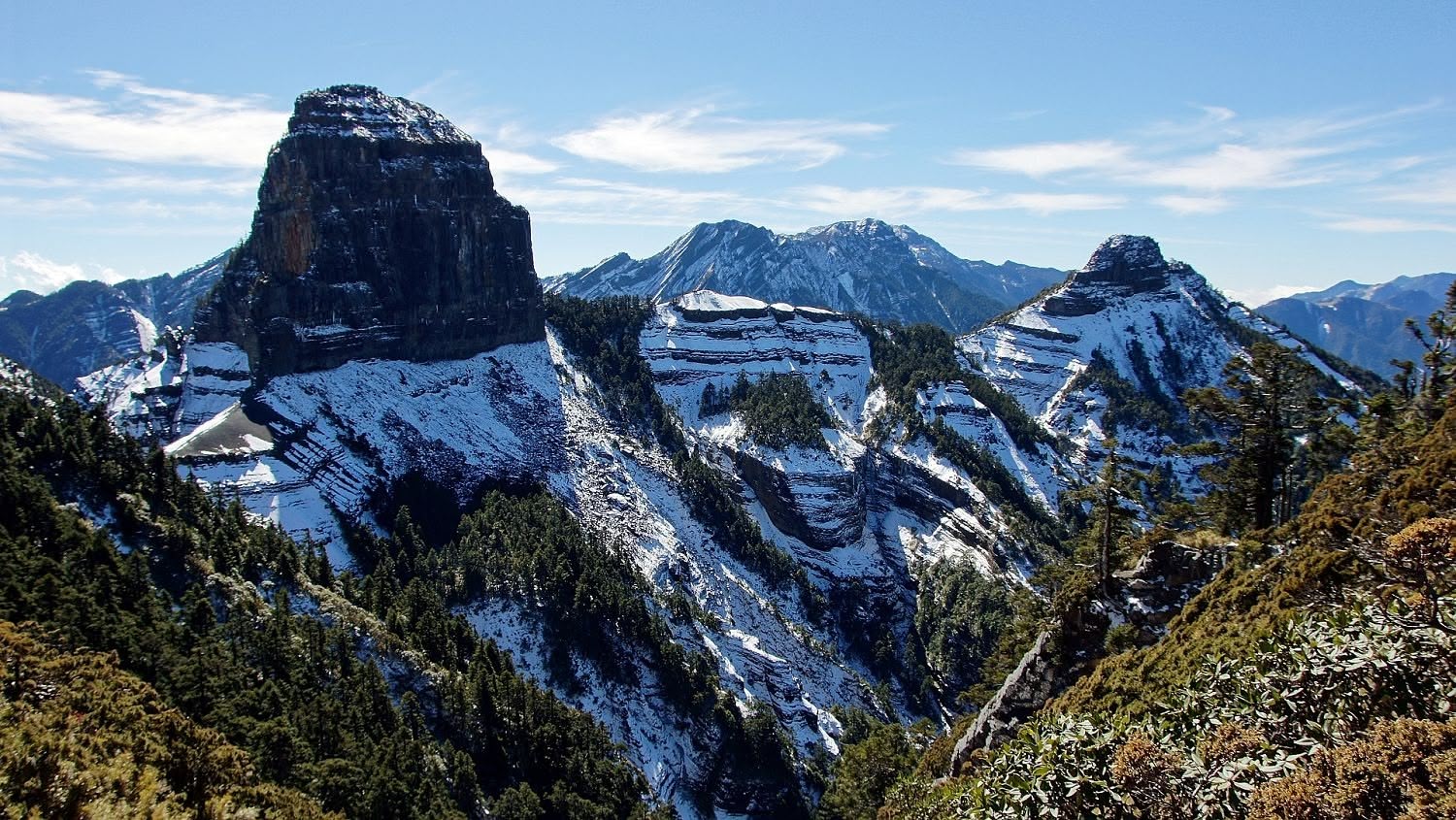
Shei-Pa takes its name from two of Taiwan’s most significant high peaks: Xueshan(雪山, “Snow Mountain”) at 3,886 metres — the second highest in Taiwan — and Dabajian Mountain(大霸尖山), whose strikingly sheer cliff face has made it one of the most photographed peaks on the island. The park covers 76,850 hectares of the northern Central Mountain Range, with elevations ranging from 760 to 3,886 metres.
The park is less commonly visited by international travellers than Taroko or Yushan, which means its trails tend to be quieter. Like Yushan, access to the high peaks requires permits, applied for through the national hiking permit system. The Xueshan main peak trail from the Wuling Farm(武陵農場) entrance is among the finest two- to three-day high-mountain hikes in Taiwan, passing through old-growth forest, alpine grasslands, and rocky summit ridgelines.
Wildlife is a genuine draw here. The Formosan landlocked salmon(櫻花鉤吻鮭) — a glacial relic species found nowhere else in the world — survives in the cold headwaters of the Dajia River within the park. Wuling Farm is a working agricultural station with adjacent cherry blossom orchards that attract large crowds in late winter. It functions as both the main entry point for the Xueshan trail and as a scenic destination in its own right.
What to look for:
Dabajian Mountain is climbed less often than Xueshan, partly because of its difficulty, but the views from its summit of the surrounding ridgeline are exceptional. For those who want high-altitude scenery without a permit-heavy summit push, trails in the Guanwu(觀霧) area on the park’s western flank offer waterfalls, old-growth forest, and mountain views on day-long circuits.
Who it suits: Experienced hikers seeking Taiwan’s second-highest peak or a quieter alternative to Yushan; nature photographers; those interested in endemic wildlife.