Types of Eateries: How to Choose
Understanding Taiwan’s diverse categories of eating establishments helps you select appropriately for different occasions and needs. Unlike many Western cities where restaurants divide primarily by cuisine type and price point, Taiwanese eateries divide by format, service style, and the eating experience they provide.
Street Food Vendors and Specialist Stalls
These represent Taiwan’s most iconic eating format: small operations specialising in one or a few items, often family-run, sometimes for generations. You’ll find them in night markets, traditional markets, and lining neighbourhood streets. Quality varies enormously, from transcendent to mediocre, making them the most rewarding yet challenging category for travellers.
Choose street food vendors when you want authentic local experiences and don’t mind some uncertainty. The best strategy involves observing locals’ behaviour: where do people queue? What are Taiwanese customers (not tourists) ordering? Vendors with Michelin Bib Gourmand stickers have received professional recognition, though this isn’t always a guarantee of quality, and many excellent vendors lack any formal recognition.
Practical considerations include limited or no seating (you may eat standing), minimal English (pointing and observing work well), and cash-only payment in most cases.
Noodle and Rice Shops(麵店)
These casual establishments serve noodle soups, rice dishes, and simple stir-fries, typically with a standard menu displayed on walls. They function as neighbourhood eating rooms where locals grab quick, satisfying meals. The format resembles a casual restaurant more than street food, with table service and proper seating.
Choose noodle shops when you want a complete, comfortable meal without excessive deliberation. Pricing remains quite reasonable, typically 100-200 TWD per person. These establishments often open long hours, making them reliable options when other places have closed. To avoid mediocre one, you could look for busy shops with high turnover: this ensures fresh preparations and indicates local approval.
Self-Service Buffets(自助餐)
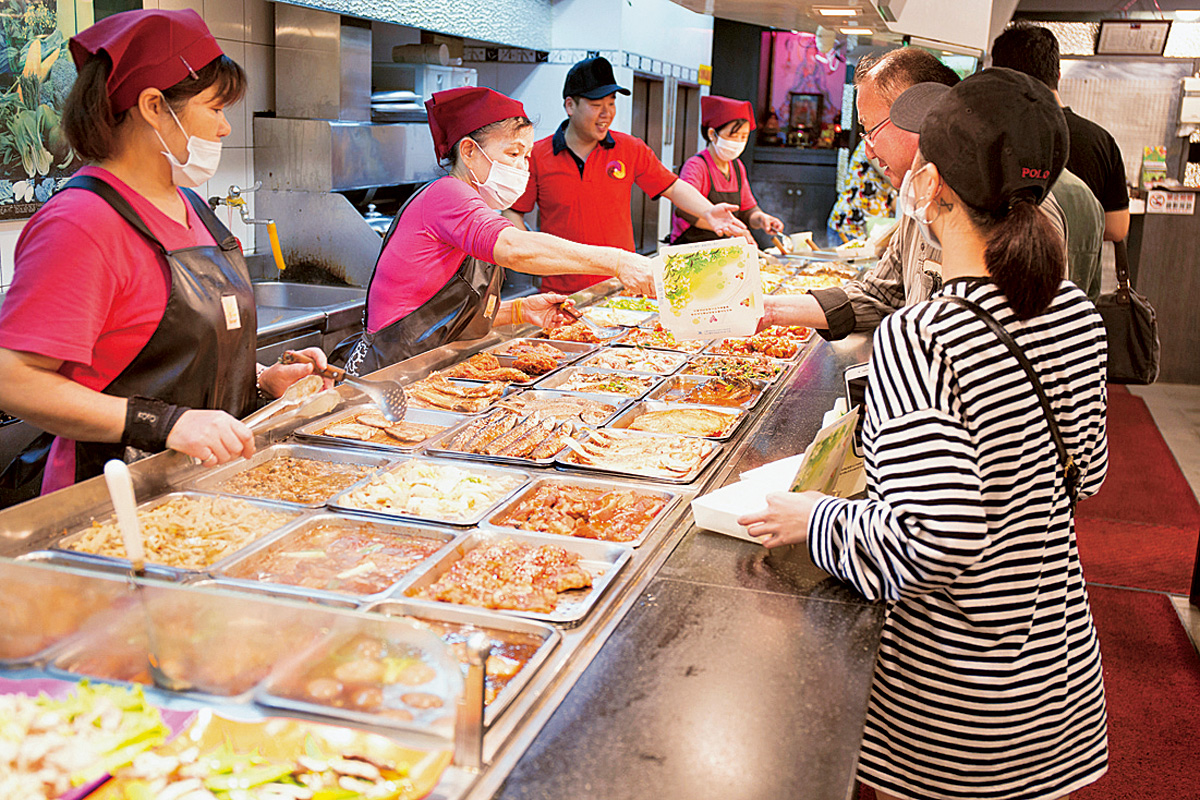
Taiwan’s self-service buffets, found in business districts and residential neighbourhoods, offer the most practical solution for everyday eating, particularly for travellers unsure about ordering or wanting to see food before committing. These establishments display dozens of pre-cooked dishes, including vegetables, meats, seafood, tofu preparations, that you select cafeteria-style. Staff weigh your plate (or check what you have chosen, the method varies from one to another) and charge accordingly, typically around 100-150 TWD for a generous meal.
Choose self-service buffets when you want variety, control over exactly what you’re eating, and a relatively healthy meal with proper vegetables. They excel for solo travellers or small groups who want to try multiple dishes without ordering large quantities. The format also works brilliantly for dietary restrictions; you can see exactly what’s in each dish and avoid problematic ingredients.
Quality varies significantly between establishments. Better buffets refresh dishes frequently throughout lunch and dinner service, maintain proper temperatures, and display fresh, appetising-looking preparations. Avoid buffets with dried-out food or limited customers: turnover matters enormously in this format.
Stir-Fried Restaurants(熱炒)
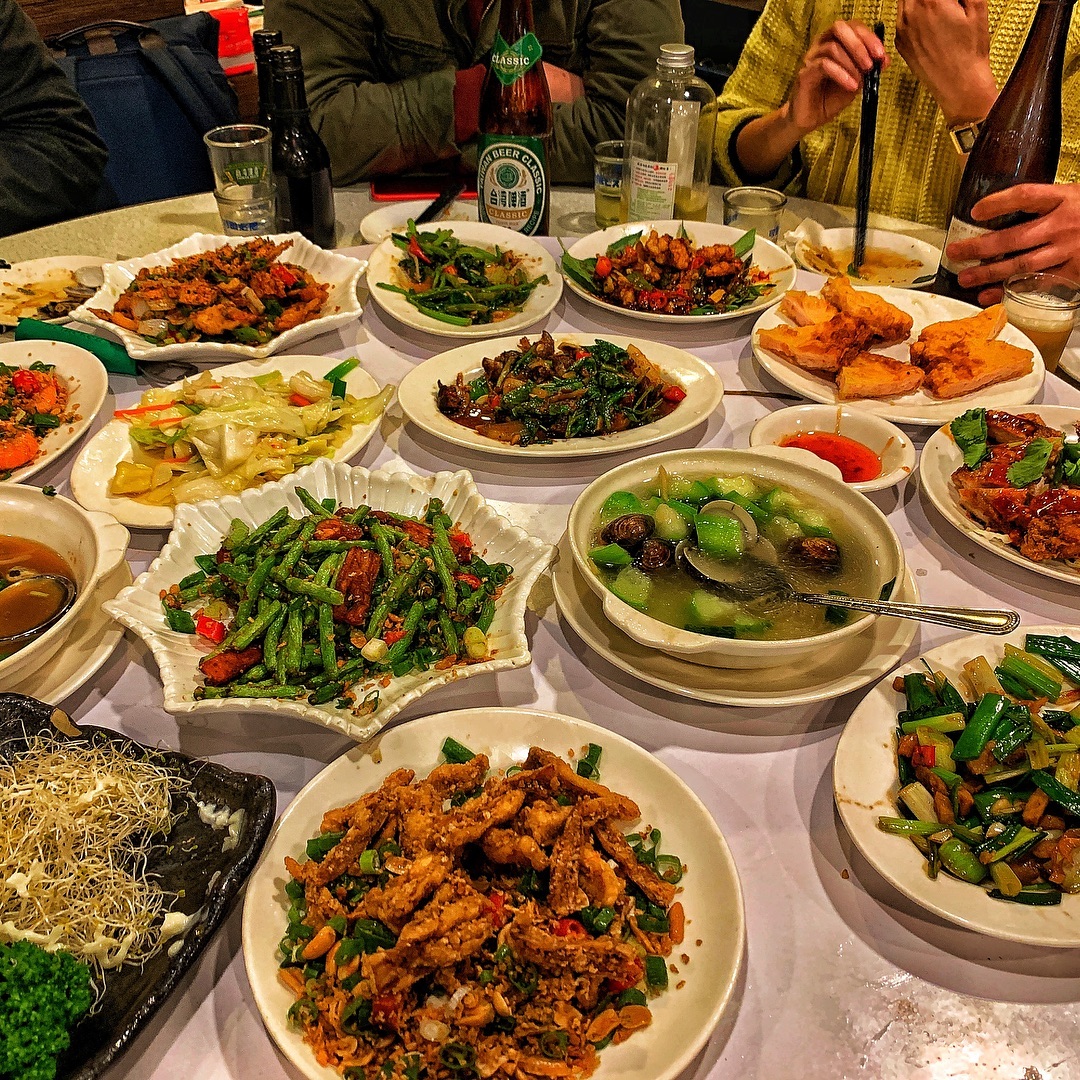
Re chao(熱炒)literally means “hot stir-fry” but has come to denote a specific style of casual restaurant serving seafood, stir-fries, and grilled items ordered family-style with rice and beer. These establishments function as Taiwan’s equivalent to beer halls or izakayas: loud, convivial places where groups gather to share multiple dishes over drinks.
Choose stir-fried restaurants when dining with a group (minimum three people, ideally four or more) and wanting to experience Taiwan’s more boisterous eating culture. The format works poorly for solo travellers or couples since dishes are sized for sharing. Ordering requires confidence; menus list dozens of items, and staff expect you to order multiple dishes at once. A reasonable approach involves selecting one or two seafood items, several vegetable dishes, and one or two meat preparations, along with rice for the table.
Stir-fried restaurants can seem intimidating initially, with their cluttered interiors and shouting service style. However, they represent an important facet of Taiwanese eating culture and often provide excellent value for groups. Evening hours (after 6 PM) suit the format best.
Hot Pot Restaurants
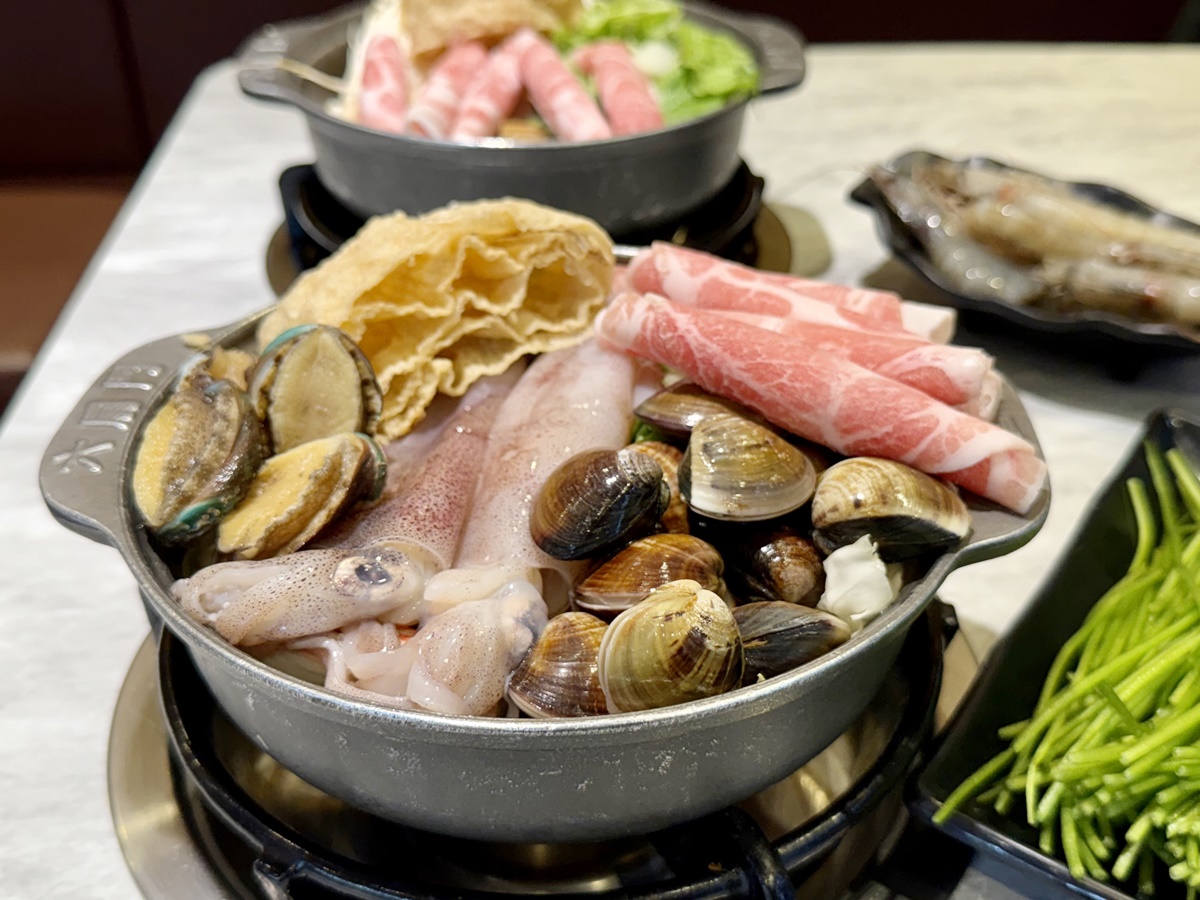
Hot pot involves cooking raw ingredients in simmering broth at your table, then eating them with various dipping sauces. The format originated in northern China but has evolved distinctly in Taiwan, incorporating local ingredients and developing unique regional styles. For travellers, hot pot provides insight into Taiwanese social dining whilst offering a format where you control exactly what you eat, making it suitable for various dietary preferences. Taiwanese hot pot tends toward subtlety, allowing ingredient flavours to shine rather than overwhelming them with intensely spiced broths.
Taiwan offers numerous hot pot variations, each with distinct characteristics that suit different tastes and occasions.
All-you-can-eat hot pot dominates Taiwan’s hot pot landscape. These establishments charge a fixed price (typically 300-600 TWD per person depending on quality tier) and allow unlimited ingredient selection within a time limit, usually 90-120 minutes. The format works brilliantly for groups wanting variety without complicated ordering or bill-splitting. Quality varies significantly between chains; higher-priced establishments offer premium ingredients including better meat cuts, fresh seafood, and more elaborate broths.
Individual pot hot pot (and Shabu-shabu, Japanese-influenced hot pot) provides each diner with their own pot and personal broth selection rather than sharing a large communal pot. This format has gained popularity because it allows personal broth preferences, accommodates different spice tolerances, and feels more hygienic. Many modern hot pot restaurants default to this format, though communal pots remain available for groups wanting traditional shared eating.
Sichuan/Mala hot pot features the numbing-spicy mala broth that defines Sichuan cuisine. These restaurants typically offer split pots with mala broth on one side and mild broth on the other, accommodating different spice tolerances. The format appeals to those seeking bold, intense flavours and can withstand significant spice. However, understand that authentic mala broth delivers genuine heat and the characteristic “ma” (numbing) sensation from Sichuan peppercorns: this isn’t mild food with red colour added for show.
BBQ Restaurants
Taiwanese barbecue differs significantly from hot pot in cooking method but shares the interactive, social character. In BBQ restaurants, diners grill meat at their table. The format involves grilling marinated and unmarinated meats, seafood, and vegetables on tabletop grills, then wrapping cooked items in lettuce leaves or bread, or eating them directly.
All-you-can-eat barbecue mirrors the hot pot format with fixed pricing (typically 400-700 TWD per person) and time limits. These establishments provide unlimited meat, seafood, vegetables, and side dishes within your time allocation. Quality correlates closely with price; premium establishments offer better meat grades (including wagyu beef options), fresh seafood, and more elaborate side dishes. Budget options provide acceptable but unremarkable meat quality and limited selections.
A la carte barbecue charges per item ordered, allowing more controlled spending but requiring careful menu navigation. This format suits smaller groups or diners wanting specific premium items without paying all-you-can-eat premiums. The better a la carte restaurants emphasise ingredient quality and preparation, offering house-made marinades and carefully sourced meats.
Night Markets(夜市)
Covered extensively above, night markets function less as a restaurant category and more as eating environments that deserve separate consideration. Choose night markets when you want variety, atmosphere, and the quintessential Taiwanese eating experience, but be prepared for crowds, limited seating, and variable quality.
The most strategic approach involves researching specific vendors beforehand rather than attempting to eat everything that looks interesting. Arrive hungry but pace yourself. The goal isn’t to eat everything but to enjoy several excellent things without becoming uncomfortably full.
Breakfast Shops(早餐店)
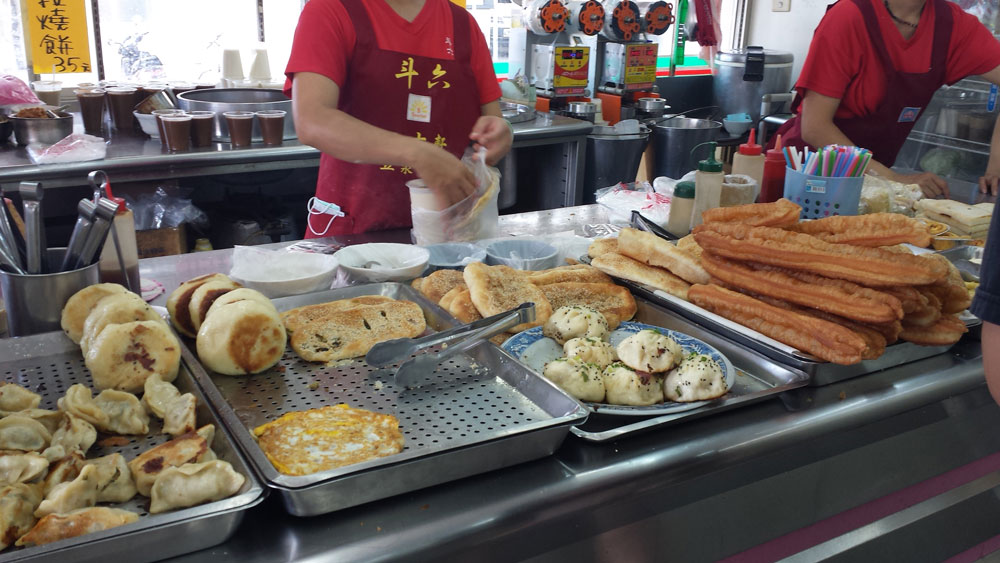
Taiwan’s breakfast shop culture deserves recognition as a distinct category. These establishments, found on virtually every street, serve Taiwanese-Western hybrid breakfasts: egg pancakes, sandwiches, hamburgers, soy milk, and milk tea. They operate only during morning hours (typically 6 AM to 11 AM), providing quick breakfast for workers and students.
Choose breakfast shops when you want an authentic Taiwanese breakfast experience or need an early meal. The format is casual and efficient; you order at the counter and food comes quickly, either for takeaway or to eat at minimal seating. Language barriers can be challenging, but pointing at picture menus works well. Popular items include egg pancakes (dan bing), radish cake, turnip cake, and doujiang (soy milk).
Southern Taiwan, particularly Tainan, offers a completely different breakfast culture featuring savoury soups and traditional preparations rather than Western-influenced items. If you’re visiting Tainan, experiencing the local breakfast culture should be a priority.
Fine Dining and Formal Restaurants(大菜)
For banquet-style meals or upscale interpretations of Taiwanese and Chinese cuisines, formal restaurants provide appropriate settings. These establishments feature round tables for group dining, extensive menus, and service protocols following traditional Chinese restaurant etiquette.
Choose fine dining when celebrating special occasions, wanting to understand formal Taiwanese eating culture, or needing to experience high-end Chinese regional cuisines. Reservations are typically necessary, and most work best with groups of six or more who can share multiple dishes. Pricing varies enormously, from mid-range (1000-2000 TWD per person) to genuinely expensive (5000+ TWD per person).
Formal restaurants also include Taiwan’s growing contemporary dining scene, where younger chefs reinterpret traditional ingredients and techniques with modern approaches. These establishments often offer tasting menus suitable for smaller groups and provide unique perspectives on Taiwanese cuisine’s evolution.