Food Culture Quirks and Customs
Several aspects of Taiwan’s food culture initially puzzle Western visitors but make perfect sense once you understand the underlying logic.
The Ubiquity of Convenience Stores
Taiwan possesses one of the world’s highest densities of convenience stores, with major chains like 7-Eleven and FamilyMart appearing every few blocks in urban areas. These aren’t merely shops selling packaged snacks; they function as critical infrastructure for Taiwanese daily life.
Beyond standard retail, convenience stores offer hot meals (tea eggs, steamed buns, bento boxes, pasta, etc.), beverage preparation areas with proper seating, bill payment services, package pickup, and even concert ticket purchases. Many Taiwanese people eat convenience store food regularly without stigma; the quality exceeds what Western visitors expect from similar establishments.
For travellers, convenience stores provide reliable fallback options when restaurants are closed, language barriers feel overwhelming, or you simply want something familiar and predictable. The stores also sell bottled tea drinks (far superior to most Western bottled teas), snacks worth trying (pineapple cakes, mochi, various chips and crackers), and provide clean toilets.
Convenience Store Evening Discounts
Taiwanese convenience stores operate a timed discount system on fresh and prepared foods — sandwiches, onigiri, bento boxes, steamed buns, and similar items — as they approach their sell-by time, typically beginning from around 7 or 8 pm depending on the chain. Items are progressively marked down, often to 20% to 40% off, with a coloured sticker indicating the discount tier. For budget-conscious travellers it represents an excellent opportunity to try a wide variety of prepared foods at very low cost. It is worth noting that the quality of these items has not deteriorated — the discount reflects proximity to the store’s internal freshness cutoff, not actual spoilage — and regulars often time their evening convenience store visit deliberately around this window.
Tap Water: Meets Standards, But Still Not Drunk Straight
Taiwan’s treated water meets strict international standards — over 99% of water leaving treatment plants is technically potable — but the “last mile” of delivery, meaning the pipes and rooftop storage tanks inside individual buildings, remains the critical variable. Many apartments, especially older ones, rely on rooftop water tanks that can introduce bacteria or sediment if not cleaned regularly, and pipes in older buildings may be corroded. The practical upshot for visitors is that tap water is safe to boil or filter, and you will find hot-water dispensers in virtually every hotel, hostel, and convenience store for this purpose.
Soup with Everything
Taiwanese meals typically include soup, even when Westerners wouldn’t expect it. Noodle soups, of course, but also rice meals sometimes come with a small bowl of soup on the side. Self-service buffets typically include soup as part of the selection. This practice reflects traditional Chinese beliefs about digestive health and balanced meals—soup provides hydration and aids digestion.
The soups accompanying meals are usually simple, light broths rather than heavy cream-based preparations. Don’t feel obligated to finish soup if you’re full; leaving some is acceptable. The soup typically arrives with the meal rather than as a separate course.
Whole Fish on the Plate
Taiwanese cuisine generally serves fish whole — head, tail, and bones intact — rather than filleted. This is not a lack of refinement but a deliberate signal of freshness and respect: a whole fish allows the diner to judge the quality of the eyes and flesh, and it carries cultural connotations of wholeness and abundance. If you are unsure of the bones, watch how locals eat: they use chopsticks to flake the flesh gently from the spine. In traditional settings, people never flip the fish over when finishing one side because doing so is considered bad luck by many Taiwanese, evoking an overturned boat.
Beef Noodles: Clear Broth vs Red-Braised
Taiwan’s most iconic noodle dish — beef noodles(牛肉麵) — exists in two fundamentally different styles that represent distinct philosophical approaches to the broth. The clear-broth(清燉) version is made by simmering beef bones and meat without soy sauce or chilli bean paste, resulting in a pale, delicate, mineral-rich soup in which the quality of the beef and the hand-pulled noodles must stand unadorned. The red-braised(紅燒) version adds spiced soy sauce, fermented bean paste, and often chilli, producing a deep, complex, intensely savoury broth. Neither is more “authentic” — they are simply different schools — and serious noodle-seekers should try both.
Postpartum confinement: Zuoyuezi(坐月子)
In Taiwan, new mothers traditionally observe a month-long period of rest and recovery after childbirth known as zuoyuezi, or “sitting the month.” During this time, specific warming foods are prepared — often sesame oil chicken, pig’s kidney soup, and glutinous rice with wine — designed according to Chinese medicine principles to replenish the mother’s qi and blood. This practice is taken seriously enough that dedicated postnatal centres(月子中心) exist across the island, offering full residential care and chef-prepared zuoyuezi meals, and are a significant industry. Visitors curious about Taiwanese food culture will find that this tradition reveals much about the relationship between food and medicine that underpins much of everyday Taiwanese eating.
Kuai Kuai(乖乖): Snacks as Offerings to Machines
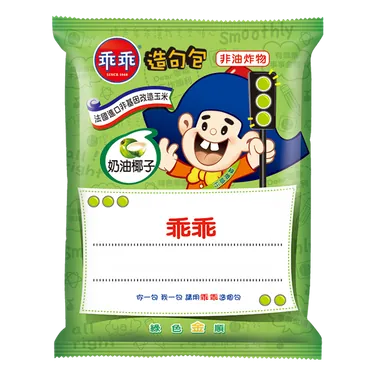
Kuai Kuai is a brand of corn puff snacks whose name means “well-behaved” or “obedient.” It has become widespread practice in Taiwanese offices and server rooms to place a packet of Kuai Kuai — ideally green packaging, the colour of smooth operation — on top of computers, servers, printers, and ATMs as a semi-superstitious offering to keep the machines running without fault. The custom is half-joking and half-sincere, observed in banks, hospitals, and tech companies alike, and reflects Taiwan’s easy blending of pragmatism with folk belief. If you see a packet of corn puffs sitting on a photocopier, you now know why, and please, don’t eat it!
KFC Egg Tarts
The egg tarts sold at KFC outlets across Taiwan — flaky, caramelised on top, and creamy within — are the Portuguese-style pastel de nata variety. In Taiwan, KFC’s egg tarts are a serious menu item offered in multiple flavours and are worth trying — they are considerably better than the brand’s global reputation might suggest.
McDonald’s Corn Soup
Taiwanese McDonald’s menus include a thick, sweet corn soup that is largely absent from Western branches of the chain. It reflects a broader principle of localisation that fast-food brands practise in Taiwan: global chains adapt their menus to local taste preferences and eating habits rather than imposing a standard international menu. The corn soup in particular resonates because sweetcorn features prominently in Taiwanese street food — on grilled cobs, blended into drinks, and mixed into savoury dishes — in a way that would seem unusual to most Western visitors. Interestingly, many Taiwanese think that the corn soup is common in Western countries.
Juicy Fried Chicken: A Taiwanese Art Form
Taiwanese fried chicken — particularly the large, bone-in cutlet known as 大雞排 — is distinct from its Japanese or American counterparts in its emphasis on extreme juiciness and a thin, shatteringly crisp batter, often flavoured with basil and white pepper. Unlike Korean fried chicken (double-fried for crispness) or American versions (thick-battered), the Taiwanese style prioritises the contrast between the crackling exterior and the yielding, flavourful meat inside. Night market fried chicken stalls typically fry each piece to order and serve it in a paper bag, often with a dusting of seasoning powder, and the queue is usually a reliable indicator of quality.
Soy: A Quiet Staple
Taiwan’s food culture is quietly underpinned by soy. Walk through any market and you’ll encounter tofu in more forms than most Westerners will have seen in a lifetime — silken(嫩豆腐), firm(板豆腐), fried puffs(油豆腐), dried sheets(豆皮), stinky tofu(臭豆腐) that divides opinion as reliably as durian does, and egg tofu(雞蛋豆腐), a softer, golden variety made with egg that is often deep-fried and served as a street snack. Then there is 百頁豆腐 — a dense, chewy pressed tofu made with soybean oil and starch rather than traditional curds, with a springy texture unlike anything else in the category, commonly found in hot pot restaurants.
For something on the sweeter end, tofu pudding(豆花) deserves its own mention. This silken tofu dessert is served warm or cold, typically with a light ginger, soy milk, or plain sugar syrup, and topped with ingredients such as peanuts, tapioca pearls, or red bean. It occupies a peculiar and charming niche: neither quite a drink nor a solid dessert, best eaten slowly with a shallow spoon at a streetside stall.
Soy milk(豆漿) is a breakfast staple rather than a coffee-shop trend — served hot or cold, plain or lightly sweetened, and noticeably fresher than the carton varieties most Westerners will be familiar with. Traditionally, it is paired with a fried dough stick(油條) for dipping.
For Western travellers, the variety can be genuinely revelatory. If your only reference point is the block of silken tofu sitting in supermarket brine back home, Taiwan will reframe the ingredient entirely.
Shaved Ice with Toppings: Building Your Own Bowl
Taiwanese cold desserts 刨冰 (shaved ice) operate on a build-your-own-topping logic that rewards curiosity. A base of finely shaved ice or sweetened milk ice is offered with a wide selection of toppings: red bean, mung bean, taro balls, grass jelly, aiyu jelly, peanuts, fresh fruit, sweetened condensed milk, and more. The combination of textures and temperatures — cold and chewy, smooth and crunchy — is the point. Do not be intimidated by the length of the topping list; choosing three or four contrasting elements and asking for less syrup if the combinations seem rich is a sensible approach.
Taiwan’s Creative Approach to Food
Taiwanese food culture treats ingredients and dishes as starting points for invention rather than fixed recipes to be preserved. This manifests in constant hybrid creations: scallion-and-floss toast sold by breakfast shops, taro-flavoured bubble tea, salt-and-pepper seasoning applied to everything from mushrooms to squid to tofu, and creative seasonal variations on classics. Night market stalls in particular reward curiosity — vendors frequently experiment with flavour combinations that seem improbable but work. Taiwan’s food creativity is generally bottom-up and informal, driven by individual vendors rather than restaurant chefs, which is one of the reasons it feels so energetic and unself-conscious.
Foods With Misleading Names
Taiwan’s menu culture is full of dishes whose names point confidently to somewhere else — and are wrong. This pattern emerged largely from the post-1949 period, when mainlanders who arrived with the Kuomintang government brought memories of regional cuisines they could no longer access, and recreated or reimagined them in Taiwan, often naming dishes after their nostalgic origins rather than their actual ingredients or provenance. The result is a fascinating layer of culinary mythology worth understanding before you order.
Mongolian Barbecue(蒙古烤肉) is neither Mongolian nor a barbecue in any meaningful sense. It was developed in Taiwan in the 1950s by a comedian and restaurateur named Wu Zhaonan, who had fled Beijing for Taipei during the Chinese Civil War. The dish involves stir-frying meat and vegetables on a large, flat iron griddle — a method with more in common with Japanese teppanyaki than anything from the Mongolian steppe. Wu originally intended to call it “Beijing Barbecue,” but during the martial law era, invoking Beijing carried dangerous political connotations, so he chose “Mongolian” instead — the farther from Beijing, the safer. If you travel to Mongolia, you will not find it there.
“Sichuan” Beef Noodle Soup(四川牛肉麵) is the informal name used in Taiwan for what the rest of the world calls Taiwanese beef noodle soup. The red-braised variety was first created in Taiwan by Sichuanese Kuomintang veterans after 1949, who adapted the bold, spicy flavours of their home province using locally available ingredients including broad-bean paste. The dish does not exist in Sichuan itself — travellers who have gone to Sichuan specifically to find it have discovered that no one there has heard of it. It is a Taiwanese invention carrying a Sichuan label, born from the longing of people cut off from their homeland.
Moon Shrimp Cake(月亮蝦餅) is a dish so consistently served in Taiwan’s Thai-style restaurants that even most Taiwanese people assume it is genuinely Thai. It is not — it was invented in Taiwan, and does not exist as a traditional dish in Thailand. The cake is made by pounding shrimp, garlic, and pork fat together, spreading the mixture between two circular spring roll wrappers, and pan-frying the result until golden, then serving it with sweet chilli sauce; the name refers to the round, moon-like shape of the finished cake. Its placement on Thai menus in Taiwan appears to be a consequence of Taiwan’s Yunnanese-Thai restaurant culture — a legacy of KMT-affiliated communities who settled in northern Thailand and later emigrated to Taiwan — rather than any genuine Thai provenance. It is a dish that feels exotic to Taiwanese diners precisely because it is served in a foreign-themed context, while being entirely homegrown.
Besides of these, there are more examples: Wenzhou wonton(溫州大餛飩) is not from Wenzhou, and Tianjin scallion pancake(天津蔥抓餅) is not from Tianjin. The broader point, as one Taiwanese food historian observed, is that you will not find Mongolian Barbecue in Mongolia, nor Sichuan braised beef noodles in Sichuan — they were created by the Taiwanese food industry to reflect chefs’ imaginations of other regions. When a Taiwanese menu name invokes a distant Chinese province, treat it as an origin story, not a geography lesson — and simply enjoy what is in the bowl.
Taiwanese Crêpes Are Not French
Taiwan’s street crêpes — sold at night markets and crêpe carts — share the name and thin, pliable wrapper with French galettes but diverge sharply in content and character. Taiwanese crêpes are typically crispy and sweet, filled with combinations of fresh fruit (strawberry, banana, kiwi), whipped cream, Nutella, and occasionally taro or red bean, and are rolled into a cone shape rather than folded flat. They emerged as a local adaptation in the 1980s and 1990s, absorbing Western ingredients into a Taiwanese street-food format. Think of them not as a French import but as an illustration of Taiwan’s ability to absorb an idea from abroad and transform it into something entirely its own.
Drinking Culture in Taiwan
Taiwan’s relationship with alcohol is more moderate and occasion-specific than in many East Asian countries where heavy drinking forms part of business culture. Beer (particularly Taiwan Beer, a local lager with a devoted following) is the most common choice; Kaoliang(高粱), a strong sorghum spirit produced on Kinmen Island, is the traditional prestige spirit for toasts. Drinking typically accompanies eating rather than preceding or following it — barbecue restaurants, seafood stalls, and braised food(滷味) shops are natural drinking environments. Toasting culture exists but is not coercive, and it is entirely acceptable to drink tea or juice at a table where others are drinking alcohol without social awkwardness.
Bento Boxes on a Train
The railway bento — 便當 — is one of Taiwan’s quiet food institutions. Taiwan Railways has sold packed meals from platform windows and cabin trolleys since the Japanese colonial era, and the tradition has never really faded. The classic version centres on braised pork over white rice, accompanied by pickled mustard greens, a hard-boiled egg, and seasonal vegetables. Certain stations have become associated with their own signature fillings, and limited editions appear regularly. In 2024 alone, over nine million bentos were sold, generating a record NTD803 million in revenue — a striking figure for what is, technically, a railway side business. Eating a TRA bento on a moving train is a small but genuinely pleasurable way into Taiwan’s food culture — unhurried, unfussy, and entirely local.
The Food War
Taiwan’s food scene comes with its own form of entertainment: the food war. Locals hold surprisingly fierce — though entirely good-natured — opinions on matters such as whether taro belongs in a hotpot, whether coriander improves or ruins a bowl of noodles, and whether the southern or northern style of rice dumpling reigns supreme. The north tends towards a drier, unwrapped dumpling boiled with savoury fillings; the south favours a lotus-leaf-wrapped, stickier version enriched with peanuts and pork belly — and partisans on either side will defend their preference with great conviction. Even something as humble as braised pork rice sparks debate: in Taipei it is typically served with finely minced, soy-braised mince, whilst in Tainan the same dish arrives with chunkier cuts and a noticeably sweeter profile. As you travel between cities, you will find that the same dish can taste meaningfully different from one region to the next, and part of the pleasure of visiting Taiwan is forming your own verdict.
Plastic Bag Culture
Taiwan’s relationship with single-use plastics is complex and changing. Whilst plastic bag bans exist for certain retailers, takeaway food vendors still commonly package everything in multiple plastic bags. Hand-shaken drinks come in plastic bags for carrying multiple cups. This extensive plastic use strikes environmentally conscious Western visitors as problematic, and it is: Taiwan is working to reduce single-use plastics, but the transition remains incomplete.
If you want to reduce plastic waste, bringing your own containers for takeaway food and reusable cups for drinks helps. Sometimes you will get a discount when doing that, especially at hand-shaken drink shops.
The Importance of Freshness Dating
Taiwanese consumers obsess over production dates and freshness in ways that exceed most Western practices. At convenience stores and supermarkets, you’ll see people checking dates on every product, sometimes reaching behind front items to find products made more recently. This isn’t paranoia but cultural practice reflecting the freshness emphasis discussed earlier.
Agricultural Prices Fluctuate Sharply
The prices of fruit, vegetables, and seafood at Taiwanese markets fluctuate more noticeably and more frequently than visitors from countries with heavily industrialised or imported food supply chains might expect. This is because the vast majority of Taiwan’s produce is domestically grown, meaning that typhoon damage to a crop, an exceptionally good harvest, or a change in season can directly and rapidly shift market prices. A kilogram of mangoes might cost three times more in a lean week than after a bumper harvest. This is not price-gouging — it reflects the real rhythm of a food system still intimately connected to local agriculture and weather.
Sharing Food as Social Glue
Sharing food carries enormous social significance in Taiwan. Bringing snacks or drinks to friends, sharing dishes at restaurants, and gifting food items express care and maintain relationships. You’ll notice this constantly: people buying extra portions to share, workers bringing snacks to share with colleagues, friends buying rounds of hand-shaken drinks.
Participating in this sharing culture helps you connect with Taiwanese people. Bringing small food gifts when visiting someone’s home (fruit, bakery items, or specialty snacks from your home country) shows courtesy.
Noise Levels
Taiwanese restaurants, particularly casual ones and stir-fried establishments, operate at noise levels that can overwhelm visitors from quieter food cultures. Kitchens aren’t hidden; you hear woks clanging, orders being shouted, and exhaust fans roaring. Diners converse at volumes that might seem inappropriately loud in Western restaurants. This energetic atmosphere represents normal, not rudeness or poor restaurant management.
If you prefer quiet dining, choose upscale restaurants, which typically maintain calmer atmospheres. But don’t avoid casual restaurants due to noise: you’ll miss essential Taiwan food experiences.
Shared Eating Customs
Family-style sharing dominates traditional Taiwanese eating culture. At restaurants with round tables, dishes arrive in the centre and everyone serves themselves using communal spoons or chopsticks.
When serving yourself from shared dishes, take reasonable portions that leave enough for others. Don’t dig through dishes searching for premium pieces; take what’s accessible. If you’re eating with Taiwanese hosts, they’ll often serve you directly, particularly choice pieces: accept graciously rather than protesting, as this gesture expresses hospitality.
Chopstick Etiquette
Basic chopstick rules apply: never stick chopsticks vertically in rice (resembles funeral incense), don’t use chopsticks to point at people, and don’t pass food directly chopstick-to-chopstick (resembles funeral customs). Beyond these taboos, Taiwanese chopstick etiquette is fairly relaxed. If you struggle with chopsticks, most establishments can provide forks without judgment.
Resting chopsticks across your bowl or plate between bites is acceptable. Some restaurants provide chopstick rests; use them when available. After finishing, place chopsticks together on the table or plate rather than leaving them in bowls.
Drinking Etiquette
Tea or water appears automatically at most restaurants; this is standard service rather than a charge in most cases (though some finer establishments may charge).
When drinking alcohol socially, particularly in business or formal contexts, observe that Taiwanese drinking culture involves toasting and the concept of gan bei (乾杯, literally “dry glass,” meaning to drain your drink). However, the actual practice is less extreme than in some East Asian countries; token sips often suffice. If you don’t drink alcohol, simply declining is increasingly acceptable, particularly among younger Taiwanese.
Paying the Bill
Traditional Taiwanese custom involves one person paying the entire bill rather than splitting, with implicit reciprocity (I’ll pay this time, you’ll pay next time). When eating with Taiwanese acquaintances, expect potential disagreement or even mild “fighting” over who pays: this ritual demonstrates generosity and hospitality. Foreign visitors shouldn’t feel obligated to participate in this custom, but understanding it prevents confusion. But in everyday life, splitting the bill is very common.
For splitting bills among foreigners, casual restaurants usually accommodate separated payments if you ask. Self-service buffets and some chains explicitly allow individual payment. Tipping doesn’t exist in Taiwan; prices are final and service charges (usually 10%) are included in prices at restaurants that charge them (typically indicated on menus).
Table Manners
Taiwanese table manners are relatively casual. Making noise whilst eating noodle soup is acceptable and natural. Using provided napkins or tissues to wipe your mouth is normal. Reaching across the table for items is fine in casual settings, though in formal contexts, asking someone to pass items shows better manners.
Mobile phone use at tables has become ubiquitous, particularly photographing food. This behaviour is completely normalised; don’t feel self-conscious about taking photos. However, photographing other diners without permission remains intrusive.
Taiwanese Festivals Are Mostly About Food
A striking feature of Taiwan’s calendar of religious and seasonal festivals is that almost every one of them has a defining food associated with it: glutinous rice dumplings(粽子) for Dragon Boat Festival, mooncakes(月餅) for Mid-Autumn Festival, tāngyuán(湯圓) for Lantern Festival, sticky rice cakes(年糕) for Lunar New Year, and so on. Food is not merely incidental to these celebrations but is often the central act of commemoration — made at home, shared with relatives, or offered at temple altars in tradition. Asking a Taiwanese person “What do you eat for [festival]?” is invariably a better opening to cultural conversation than asking about the festival’s mythology.